
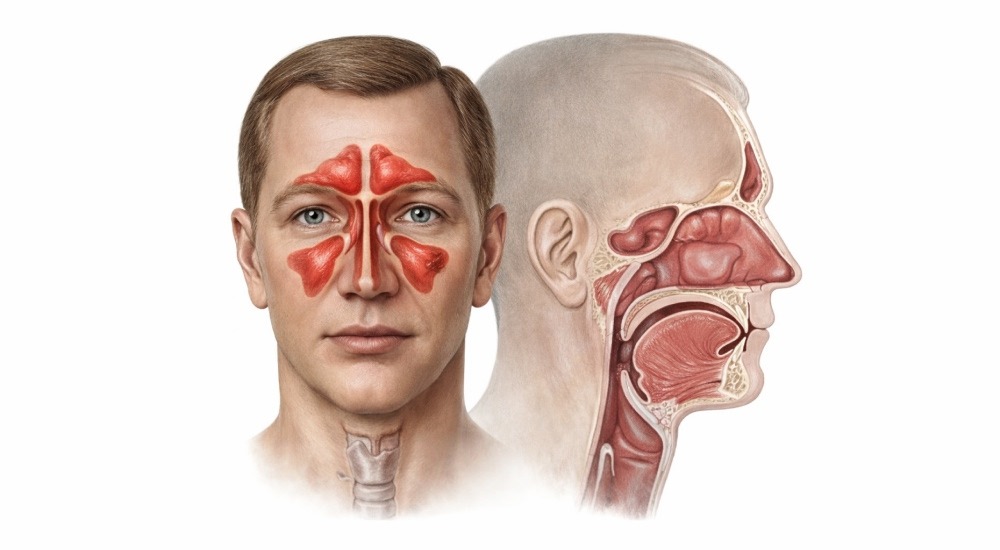
The head and neck pack an extraordinary amount into a small space — the airway, the swallowing passage, major nerves and blood vessels, the voice box and the delicate base of the skull. Surgery in this region is among the most specialised in medicine, demanding both precision and deep anatomical knowledge. Understanding what skull base and head & neck surgery treats, and why it belongs with the experienced best ENT surgeon in Ahmedabad, helps patients facing these problems know what to expect. Dr. Neeraj Suri offers a clear overview of this advanced field.
What Is Head & Neck Surgery?
Head and neck surgery is the branch of ENT that manages tumours, growths and complex disorders of the region below the brain and above the collarbone — excluding the eyes and brain themselves. It covers the mouth, throat, voice box, salivary glands, thyroid, sinuses and the lymph nodes of the neck. Because these structures are responsible for breathing, swallowing, speaking and appearance, surgery here is about far more than removing disease — it is about preserving the functions that make daily life possible.
What Is Skull Base Surgery?
The skull base is the floor of the skull, where the brain sits above and the nose, sinuses and deep head-and-neck structures lie below. Tumours and conditions in this hard-to-reach area were once extremely difficult to treat. Today, much skull base surgery is performed endoscopically — through the nostrils, with no external incision — allowing surgeons to reach and remove growths at the base of the skull through the body’s natural passages. It is an area where ENT and neurosurgical expertise often meet.
Conditions Treated in This Region
Skull base and head & neck surgery addresses a wide range of problems: benign and malignant tumours of the sinuses, throat, voice box, mouth and salivary glands; thyroid and parathyroid disease; neck lumps and lymph node disease; certain pituitary and skull base tumours reached through the nose; and complex sinus disease extending toward the skull base. Some are cancers; many are entirely benign — but all sit in territory that demands specialist skill.
Why It Needs a Specialist ENT Surgeon in Ahmedabad
This is not general surgery. The reasons it requires a dedicated ENT surgeon in Ahmedabad with head-and-neck training are clear:
- The region is dense with critical nerves and major blood vessels that must be protected
- Preserving the ability to breathe, swallow and speak is central to a good outcome
- Advanced endoscopic and microscopic techniques require specific expertise and equipment
- The best results come from a coordinated team — ENT, oncology, radiology and reconstruction — working together
Experience genuinely matters here; outcomes in complex head-and-neck work are closely tied to how regularly a surgeon and team perform these procedures.
The Importance of a Team Approach
Modern head-and-neck care is delivered by a multidisciplinary team rather than a lone surgeon. Radiologists map the disease, pathologists confirm it, the ENT head-and-neck surgeon leads the operation, and reconstruction, oncology, speech and swallowing therapy support recovery. This coordinated approach is what allows even complex problems to be treated while protecting quality of life — and it is the standard any patient facing such surgery should expect.
Recovery After Head & Neck Surgery
Recovery from head and neck surgery varies enormously with the size and site of the procedure, and a good team prepares you honestly for what to expect. Minor procedures may need only a short recovery, while major operations can involve a longer hospital stay and a period of rehabilitation for speech and swallowing. Because this region governs eating, talking and breathing, recovery often involves a coordinated team — nurses, dietitians, and speech and swallowing therapists — supporting you back to normal function. Modern, often minimally invasive techniques have shortened many recoveries considerably compared with the past. Knowing the likely path ahead, step by step, makes even major surgery far less daunting.
Questions Worth Asking Your Head & Neck Surgeon
Because these are significant operations, it is entirely reasonable — and wise — to ask searching questions before proceeding:
- What exactly is the diagnosis, and is it benign or malignant?
- How many procedures like mine do you and the team perform each year?
- Can this be done endoscopically or with a minimally invasive approach?
- How will my breathing, swallowing, voice and appearance be affected, and what support is there?
- Is my case discussed by a multidisciplinary team, and what is the full plan?
A confident, experienced surgeon welcomes these questions, and the clarity of the answers tells you a great deal about the care you can expect.
The Role of Reconstruction
When surgery in the head and neck removes tissue that affects appearance or function, reconstruction is often part of the same plan — restoring form and the ability to eat, speak and breathe. Advances in reconstructive techniques mean that even substantial surgery can now preserve quality of life to a degree that was not possible in the past. This is another reason such surgery belongs with an experienced, well-supported team, where the operation and the recovery of function are planned together from the very start.
Benign or Malignant: Why the Distinction Shapes Everything
A crucial early question in head and neck problems is whether a growth is benign (non-cancerous) or malignant (cancerous), because it changes the whole approach. Many head and neck lumps and tumours are entirely benign — harmless salivary gland tumours, benign thyroid nodules, or simple cysts — and may need only monitoring or straightforward removal. Malignant tumours need prompt, coordinated treatment. This is exactly why proper diagnosis comes before any treatment: examination, imaging and usually a biopsy establish precisely what a growth is before decisions are made. It is also why a persistent neck lump should never simply be watched at home indefinitely — not because it is likely to be sinister, but because knowing for certain, one way or the other, is what allows the right, measured response. Getting that answer early is reassuring in the common benign cases and genuinely life-saving in the rare serious ones.
Expertise Where It Matters Most
Skull base and head & neck surgery sits at the most complex crossroads of the body, where treating disease and preserving the ability to breathe, eat, speak and look like yourself must be balanced with great care. It is a field transformed in recent years by minimally invasive techniques and by the multidisciplinary team approach, so that even serious conditions can often be treated with better outcomes and quality of life than ever before. If you or someone you love faces a diagnosis in this region, the single most important step is to seek genuine, experienced specialist care within a proper team. In an area this demanding, expertise is not a luxury — it is the foundation of the best possible result.
Facing Head & Neck Surgery With Confidence
Being told you need skull base or head & neck surgery is understandably daunting, but this is a highly advanced field with excellent outcomes in experienced hands, and many procedures are now far less invasive than in the past. If you or a loved one faces a tumour, neck lump or complex condition in this region, seeking an experienced ENT surgeon in Ahmedabad with dedicated head-and-neck expertise — and a full team behind them — is the most important step toward the best possible result.
Facing a Complex Head or Neck Problem? Seek Expertise
For a neck lump, tumour or complex head-and-neck condition, specialist expertise makes all the difference. Book a consultation with Dr. Neeraj Suri at Evara Hospital for expert assessment and honest guidance. Call +91 95122 68282 or make an appointment online — with evening and Sunday OPDs across Ahmedabad and Gandhinagar.
Author & Medical Review
Dr. Neeraj Suri, MS (ENT) — Ex-Fellow, Stanford University & House Ear Institute, Los Angeles; Ex-Associate Professor, GMERS Medical College, Gandhinagar. Medically reviewed by Dr. Neeraj Suri.
FAQs
Q. What does head & neck surgery treat?
A. Tumours and disorders of the mouth, throat, voice box, salivary glands, thyroid, sinuses and neck lymph nodes — while preserving breathing, swallowing and speech.
Q. Is all skull base surgery done through open incisions?
A. No — much is now performed endoscopically through the nostrils, with no external cut, reaching the skull base through the body’s natural passages.
Q. Why see an ENT surgeon for a neck lump?
A. ENT head-and-neck surgeons specialise in this region’s complex anatomy and can diagnose and treat neck lumps while protecting nearby nerves and vessels.
Q. Are these conditions always cancer?
A. No — many head-and-neck and skull base conditions are benign, but all need specialist assessment because of where they sit.