
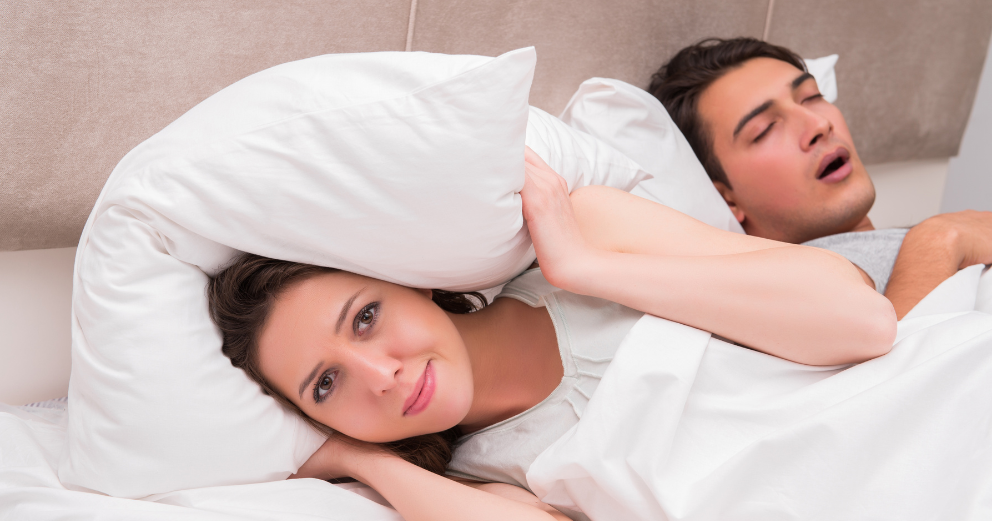
Almost everyone snores occasionally. But when snoring is loud enough to wake your partner, or when you wake up feeling exhausted despite 8 hours in bed, or when your partner witnesses you stop breathing during sleep — something more serious may be happening.
Understanding the difference between simple snoring and obstructive sleep apnea (OSA) is crucial. One is an inconvenience. The other is a significant medical condition linked to high blood pressure, heart disease, type 2 diabetes, stroke, and road traffic accidents from daytime drowsiness.
At Evara Hospital, Gandhinagar, Dr. Neeraj Suri evaluates and treats the full spectrum of sleep-disordered breathing — from simple palatal snoring to complex obstructive sleep apnea — with medical, device-based, and surgical options.
For a full picture of ENT conditions treated at Evara Hospital, read: ENT Specialist in Ahmedabad — Dr. Neeraj Suri at Evara Hospital.
Simple Snoring vs Obstructive Sleep Apnea: What’s the Difference?
Simple (Primary) Snoring:
- Sound produced by vibration of soft palate and throat tissues as air passes through a narrowed upper airway
- Breathing is continuous — no pauses, no drops in oxygen
- Patient sleeps through and feels reasonably rested
- A social problem (for the sleeping partner!) but not a direct health risk
Obstructive Sleep Apnea (OSA):
- The upper airway collapses partially or completely during sleep — stopping airflow entirely (apnea) or severely reducing it (hypopnea)
- Each event lasts 10 seconds or longer; severe OSA can involve hundreds of events per night
- Oxygen levels drop, the brain arouses the body to restore breathing (often without the patient fully waking), sleep is fragmented
- Patient wakes unrefreshed, experiences excessive daytime sleepiness, difficulty concentrating, and mood changes
OSA is not just a sleep problem. It is a cardiovascular risk factor. Untreated severe OSA doubles the risk of hypertension, significantly increases the risk of atrial fibrillation, and is independently associated with increased cardiovascular mortality.
Warning Signs That Suggest OSA Rather Than Simple Snoring
Consult Dr. Neeraj Suri at Evara Hospital if you experience:
- Witnessed apneas — partner observes you stop breathing during sleep
- Excessive daytime sleepiness — falling asleep watching TV, during meetings, or while driving
- Waking with choking, gasping, or shortness of breath
- Morning headaches — from overnight CO₂ accumulation
- Unrefreshing sleep — despite adequate time in bed
- Frequent nighttime urination (nocturia) — a surprisingly common OSA symptom
- Difficulty concentrating, memory problems, or mood changes
- Obesity + large neck circumference (>40 cm in women, >43 cm in men) — strong risk factors
In children, OSA presents differently: bedwetting, behavioural problems, poor academic performance, and unusual sleep positions (sleeping with neck extended or sitting up).
Diagnosis at Evara Hospital Ahmedabad
Step 1 — Clinical Evaluation: Dr. Suri performs a full ENT examination including nasal endoscopy, examination of the soft palate and uvula, tonsil size assessment, and Muller’s manoeuvre to identify sites of collapse.
Step 2 — Polysomnography (Sleep Study): The gold standard diagnostic test for OSA. Records oxygen saturation, airflow, breathing effort, heart rate, and sleep stages overnight. Can be performed as a full in-lab study or as a validated home sleep test.
Interpreting the AHI (Apnea-Hypopnea Index):
- AHI 0–5: Normal
- AHI 5–15: Mild OSA
- AHI 15–30: Moderate OSA
- AHI >30: Severe OSA
Treatment Options for Snoring and Sleep Apnea in Ahmedabad
Conservative Measures (All Patients Begin Here)
- Weight reduction — a 10% reduction in body weight reduces AHI by approximately 30% in overweight patients
- Positional therapy — avoiding supine sleeping (specialised pillows or devices) for position-dependent OSA
- Alcohol avoidance at night — alcohol relaxes pharyngeal muscles and worsens collapse
- Treatment of nasal obstruction — if deviated septum or polyps are contributing
CPAP Therapy (First-Line for Moderate-Severe OSA)
Continuous Positive Airway Pressure (CPAP) delivers pressurised air through a mask, acting as a pneumatic splint keeping the upper airway open. It is the most effective non-surgical OSA treatment. Dr. Suri works with sleep medicine specialists to guide CPAP prescription and mask fitting.
Mandibular Advancement Device (MAD)
A custom-fitted oral appliance that holds the lower jaw slightly forward during sleep — widening the oropharynx. Suitable for mild-moderate OSA or for CPAP-intolerant patients.
Surgical Treatment for Snoring and OSA at Evara Hospital
Surgery is indicated when anatomical obstruction is identified, OSA is mild-moderate, and CPAP is not tolerated.
Nasal surgery (septoplasty, turbinate reduction, FESS): Improving nasal airflow reduces snoring and may improve CPAP tolerance in OSA patients.
Uvulopalatopharyngoplasty (UPPP): Removes and reshapes the soft palate, uvula, and tonsils to widen the oropharynx. Most effective for palatal level obstruction in patients without significant obesity.
Coblation channelling of the soft palate: A minimally invasive office procedure using radiofrequency energy to stiffen the soft palate — reducing vibration and snoring with minimal downtime.
Tonsillectomy and adenoidectomy: Highly effective for OSA in children (75–85% cure rate) and for adults with significantly enlarged tonsils.
Conclusion: Sleep Better — Get Expert ENT Evaluation in Ahmedabad
Snoring and sleep apnea are not conditions to simply accept. With the right evaluation and treatment, dramatic improvements in sleep quality, daytime energy, and long-term cardiovascular health are achievable.
Dr. Neeraj Suri at Evara Hospital provides the most comprehensive sleep-disordered breathing evaluation and treatment in Ahmedabad — from sleep study to surgical management, all under the care of one experienced ENT specialist.
Book your sleep and snoring evaluation at Evara Hospital today. You deserve to wake up feeling rested — and your partner deserves a quiet night.