
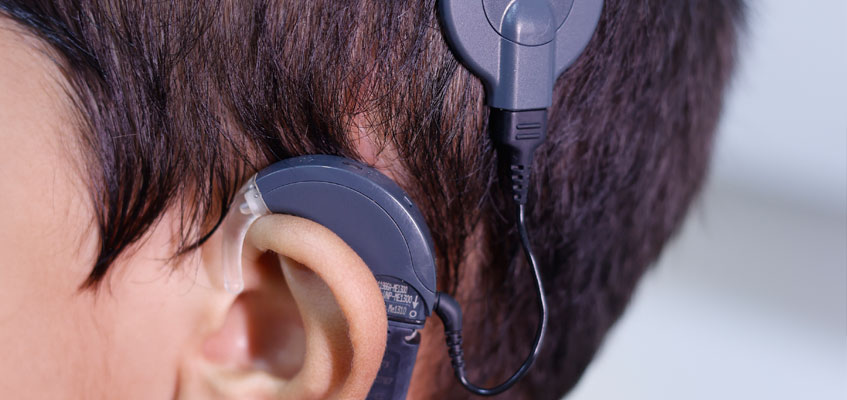
A cochlear implant can seem almost like magic — a device that lets a profoundly deaf child hear their mother’s voice, or brings an adult back into conversation. But there is nothing magical about it; it is elegant engineering that does the job a damaged inner ear no longer can. Understanding how a cochlear implant in Ahmedabad actually works helps families make the decision with clarity and confidence. Dr. Neeraj Suri explains, step by step and in plain language, exactly how sound reaches the brain again.
First, How Normal Hearing Works
To understand the implant, it helps to know what it replaces. Normally, sound waves travel down the ear canal and vibrate the eardrum. Those vibrations pass through three tiny bones into the cochlea — a snail-shaped, fluid-filled organ lined with thousands of microscopic hair cells. These hair cells convert the vibrations into electrical signals that the hearing nerve carries to the brain. In most severe hearing loss, it is these hair cells that are damaged or missing, so the nerve never receives a signal — even though the nerve itself usually still works.
Why a Cochlear Implant in Ahmedabad Is Different From a Hearing Aid
This is the key idea. A hearing aid simply makes sound louder and delivers it down the ear canal — which only helps if enough hair cells still work. A cochlear implant in Ahmedabad does something entirely different: it skips the damaged hair cells altogether and stimulates the hearing nerve directly with tiny electrical pulses. That is why an implant can help when even the most powerful hearing aid cannot — it is not amplifying sound, it is bypassing the broken part of the ear.
The Two Parts of the System
Every cochlear implant has an external part and an internal part that work together:
- The external processor sits behind the ear, with a microphone that captures sound and a small computer that converts it into a digital code
- A transmitter coil on the skin sends that code across to the internal part by radio signal
- The internal implant, placed under the skin during surgery, receives the code and converts it into electrical pulses
- The electrode array, threaded gently into the cochlea, delivers those pulses to the hearing nerve
How Sound Becomes Hearing — Step by Step
Here is the whole journey in order: the microphone picks up a sound; the processor analyses it and turns it into a digital pattern; the coil sends that pattern through the skin to the internal implant; the implant converts it into precise electrical pulses; the electrode stimulates different points along the hearing nerve; and the nerve carries these signals to the brain, which learns to interpret them as speech and sound. All of this happens instantly, in real time.
Why the Brain Has to Learn
The signal an implant delivers is not identical to natural hearing — it is a coded electrical version. At switch-on, this sounds strange, even robotic, because the brain has never received sound this way. Over weeks and months, through mapping sessions and listening practice, the brain gradually learns to make sense of the new signal, and speech becomes clear and natural. This learning phase is why rehabilitation matters as much as the surgery, and why patience in the early weeks is so richly rewarded.
What the Electrode Actually Does
The cochlea is arranged by pitch, like a piano — one end responds to high sounds, the other to low. The implant’s electrode array is designed to stimulate the matching points along this map, so different pulses represent different pitches. This clever use of the cochlea’s natural layout is what allows an implant to convey the richness of speech, and even music, rather than just noise.
One Ear or Two? Bilateral Implants Explained
A common question is whether one implant is enough or both ears should be done. Two ears working together let the brain locate where sounds come from and separate speech from background noise — the very situations a single ear struggles with. For children who are profoundly deaf in both ears, bilateral implantation, done together or in stages, is often recommended to give the fullest access to language. For adults, the decision balances benefit, cost and individual circumstances. Some people also combine an implant in one ear with a hearing aid in the other, an arrangement that suits certain patterns of loss well.
Myths About How Cochlear Implants Work
Because the technology is unfamiliar, myths abound. One is that an implant ‘makes you bionic’ or gives super-hearing — in reality it restores useful, natural-feeling hearing, no more. Another is that it destroys any remaining natural hearing; modern techniques often preserve residual low-frequency hearing. Some believe the device works instantly and perfectly at switch-on, when in fact the brain needs weeks to adapt. And many assume it is experimental — yet cochlear implantation has been performed and refined worldwide for decades, with hundreds of thousands of recipients. Understanding the reality, rather than the myth, is what lets families decide calmly.
How Long the Technology Lasts
People often ask whether they will need repeated surgery as technology advances. Reassuringly, the internal implant is designed to last a lifetime and stays in place. It is the external processor — the visible part worn behind the ear — that is upgraded every several years as technology improves, much like updating a phone while keeping the same connection. This means recipients benefit from future advances without further operations, which is one of the quiet advantages of the system’s design.
Cochlear Implants Aren’t Just for Children
There is a persistent belief that cochlear implants are mainly for babies and young children, and while early implantation is indeed vital for a deaf child’s language, adults — including older adults — benefit enormously too. An adult who lost hearing after learning to speak often adapts remarkably quickly, because the brain already knows language and simply has to relearn how to receive it. Retired people frequently describe an implant as giving them back the telephone, the television, the grandchildren’s voices and the confidence to rejoin social life. Age alone is rarely a barrier; what matters is the health of the hearing nerve, general fitness for a short operation, and the motivation to work through the adaptation period. If you or an older relative has been told that ‘nothing more can be done’ because hearing aids no longer help, it is worth getting a second opinion — an implant may open a door everyone assumed was closed.
From Understanding to Deciding
Understanding how a cochlear implant works removes much of the fear that surrounds it, and turns an intimidating idea into a clear, logical one: the device simply does electronically what a healthy inner ear does naturally, delivering sound to a working nerve. Whether that solution is right for you or your child is a separate question, answered only by a proper evaluation of hearing, anatomy and expectations. But knowing the ‘how’ is a genuine first step, because it lets families weigh the option calmly, on facts rather than fear, and ask the right questions when they seek expert advice.
Knowledge Makes the Decision Easier
Understanding how the technology works takes the fear out of it. A cochlear implant in Ahmedabad is a well-established, decades-proven system that simply does electronically what a healthy inner ear does naturally. If you or your child has been told an implant may help, learning how it works is a good first step — and an honest evaluation will tell you whether it is the right one.
Curious Whether an Implant Could Help? Ask Us
Understanding the technology is the first step; finding out if it’s right for you is the next. Book an evaluation with Dr. Neeraj Suri at Evara Hospital to learn whether a cochlear implant could restore your or your child’s hearing. Call +91 95122 68282 or book online — evening OPDs available in Ahmedabad and Gandhinagar.
Author & Medical Review
Dr. Neeraj Suri, MS (ENT) — Ex-Fellow, Stanford University & House Ear Institute, Los Angeles; Ex-Associate Professor, GMERS Medical College, Gandhinagar. Medically reviewed by Dr. Neeraj Suri.
FAQs
Does a cochlear implant give completely normal hearing?
It gives very useful hearing that most users find natural after adaptation, though the signal is a coded electrical version rather than identical to natural hearing.
Is the internal part visible?
No — it sits under the skin behind the ear. Only the small external processor is visible, and modern ones are discreet.
How does the implant know high sounds from low?
The electrode stimulates different points along the cochlea, which is naturally arranged by pitch — so each point represents a different frequency.
Can the implant get wet?
The internal part is sealed and permanent; the external processor is removed for bathing, though waterproof accessories allow swimming.