
When hearing aids stop being enough, families are often told a cochlear implant is the next step — and immediately have a hundred questions about candidacy, cost and results. This guide answers them plainly. Cochlear implant surgery in Ahmedabad is now a well-established, day-to-day procedure, but it is not right for every kind of hearing loss, and being honest about that is the first duty of any surgeon. Dr. Neeraj Suri sets out exactly who benefits, the real costs involved, and what the journey looks like from evaluation to switch-on.
What a Cochlear Implant Actually Does
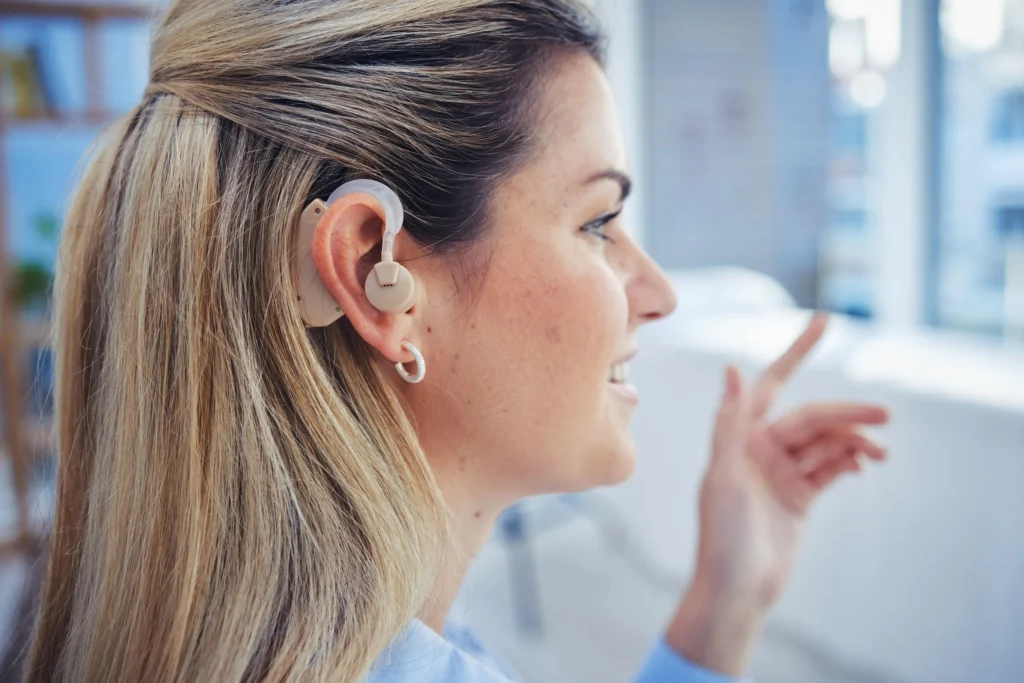
A hearing aid makes sounds louder. A cochlear implant does something fundamentally different — it bypasses the damaged hair cells of the inner ear and stimulates the hearing nerve directly. That distinction is the whole reason the device exists: when the inner ear is too damaged for amplification to help, no hearing aid, however powerful, will restore clarity, but an implant often can. It has two parts, a surgically placed internal receiver and an external processor worn behind the ear, which work together to convert sound into signals the brain learns to understand as speech.
Who Is a Candidate for Cochlear Implant Surgery in Ahmedabad?
Candidacy is decided by tests, not by age alone. Broadly, an implant is considered when:
- Hearing loss is severe to profound in both ears
- Well-fitted hearing aids no longer give useful speech understanding
- The hearing nerve and cochlea are intact on imaging
- The person (or family, for a child) is committed to the rehabilitation that follows
Children born with profound deafness do best when implanted early — ideally before age two, while the brain’s language pathways are most receptive. Adults who lose hearing later in life are also excellent candidates, especially when they act before the brain forgets how to process sound.
The Evaluation Comes First
No one is booked for surgery on a first visit. A full work-up — detailed hearing tests, a hearing-aid trial, a CT or MRI of the inner ear, and often a speech assessment — confirms both that an implant will help and that the anatomy is suitable. This stage protects you from an operation that would not deliver, and it is where an experienced team earns its reputation.
What Does It Cost — and Why the Range Is So Wide
Cost is the question families worry about most, and honesty helps. The total depends far more on the device chosen than on the surgery itself. Several manufacturers offer processors at different price points and feature levels, and the gap between a basic and a premium system is substantial. On top of the device sit the surgeon’s and hospital fees, the pre-operative evaluation, and — crucially — the ongoing cost of mapping sessions, therapy, batteries and future processor upgrades. Ask for a written, itemised estimate that separates the one-time surgery from these lifetime running costs, so there are no surprises later.
The Surgery and Recovery Timeline
The operation itself is shorter and gentler than most expect:
- Surgery takes roughly 1.5–3 hours under general anaesthesia, usually with a single overnight stay.
- The wound heals over about 2–4 weeks; there is no visible hearing yet — the device is switched on later.
- ‘Switch-on’ happens 3–4 weeks after surgery, once healing is complete.
- Mapping and auditory therapy then fine-tune the processor over the following months.
- Understanding improves gradually, not instantly — the brain is relearning sound.
Why Rehabilitation Decides the Result
The implant is only half the story. The hearing brain has to relearn how to interpret the new signal, and that happens through mapping sessions and structured listening therapy. Families who commit to this phase see the best outcomes; those who expect the switch-on to be a finish line are often disappointed. For children especially, therapy and family involvement matter as much as the surgery.
Risks and Safety of Cochlear Implant Surgery in Ahmedabad
Every operation carries some risk, and a responsible surgeon explains them clearly before you consent. For a cochlear implant these risks are low and well understood: minor wound problems, temporary dizziness as the balance system adjusts, changes in taste that usually settle, and — rarely — device or facial-nerve issues that experienced surgeons take specific steps to avoid. Modern technique, careful case selection and high surgical volume keep complications uncommon. The far bigger risk for most candidates is not the surgery itself but leaving profound hearing loss untreated, because the longer the hearing nerve goes unstimulated, the harder the brain finds it to make sense of sound once an implant is finally fitted.
Life After Cochlear Implant Surgery in Ahmedabad
Day-to-day life with an implant is more flexible than many expect. The external processor is removed for sleeping, showering and swimming, and modern devices stream phone calls, music and television directly. Users can play most sports, travel freely, and — with waterproof accessories — even swim while hearing. Batteries are changed or recharged daily, and the processor is serviced periodically. Children wear retention accessories so the processor stays put during play. None of this is burdensome once it becomes routine, and for most recipients the trade-off — a small daily care ritual in exchange for access to speech and sound — is one they would make again without hesitation.
Choosing the Best Cochlear Implant in Ahmedabad for You
There is no single ‘best’ device — the best cochlear implant in Ahmedabad is the one matched to your needs, lifestyle and budget, from a manufacturer with reliable local service and support. Battery life, water resistance, wireless streaming and the strength of the after-sales network all matter, because you will live with this system for decades. An unbiased surgeon will walk you through the options rather than steer you to one brand, and will weigh long-term support as heavily as the initial price.
Common Myths About Cochlear Implants
A few persistent myths stop families from exploring an option that could change a life, so it is worth clearing them up. Some believe an implant ‘restores normal hearing instantly’ — in reality it delivers a new kind of signal the brain learns to interpret over months, and the results, while often excellent, are the product of rehabilitation as much as surgery. Others fear the operation is dangerous or experimental; in fact cochlear implantation is a decades-old, well-established procedure performed routinely worldwide. A common worry is that a child will be ‘different’ — yet implanted children typically attend mainstream schools and speak on the phone. Finally, many assume they are ‘too old’, when adults in their seventies and eighties benefit greatly. Separating fact from myth is often the first step families take toward a decision they later wish they had made sooner.
A Journey Worth Taking
For the right candidate, a cochlear implant is not merely a medical device but a doorway back into the hearing world — to conversations at the dinner table, a grandchild’s voice, music, and the simple safety of hearing a doorbell or a car. The path involves careful evaluation, a short operation and months of committed rehabilitation, but families who walk it rarely regret it. The most common regret we hear is the opposite one: waiting too long before taking the first step. If hearing aids have stopped keeping you connected, an honest assessment costs nothing but an hour and can change the years ahead.
Making the Decision With Confidence
A cochlear implant is a lifelong investment in hearing, so choose a centre that evaluates thoroughly, quotes transparently, and offers the rehabilitation that makes it work. Evara Hospital runs one of Gujarat’s more experienced implant programmes, with in-house evaluation, surgery and long-term mapping under one roof — so the same team that assesses you also operates and supports you afterwards. If you have been searching for the best cochlear implant in Ahmedabad, look beyond the device price to the strength of that evaluation and after-care, because they are what turn a successful operation into successful hearing.
Talk to a Cochlear Implant Specialist in Ahmedabad
If hearing aids are no longer enough for you or your child, an honest evaluation is the right next step. Book a cochlear implant assessment with Dr. Neeraj Suri at Evara Hospital for a clear answer on candidacy, cost and outcomes. Call +91 95122 68282 or book online; evening and Sunday OPDs are available for families across Ahmedabad and Gandhinagar.
Author & Medical Review
Dr. Neeraj Suri, MS (ENT) — Ex-Fellow, Stanford University & House Ear Institute, Los Angeles; Ex-Associate Professor, GMERS Medical College, Gandhinagar. Medically reviewed by Dr. Neeraj Suri.
FAQs
Q. Is there an age limit for a cochlear implant?
A. No upper age limit — suitability depends on the hearing tests, the health of the hearing nerve, and general fitness for anaesthesia, not the number of years.
Q. Will I hear normally straight after switch-on?
A. No. Sound is unusual at first and improves over weeks to months as the brain adapts and the processor is mapped.
Q. Can both ears be implanted?
A. Yes, either together or in stages; bilateral implants help with hearing in noise and locating sound, and are often chosen for young children.
Q. How long does the internal implant last?
A. The internal part is designed to last for decades; the external processor is upgraded over the years as technology advances.