
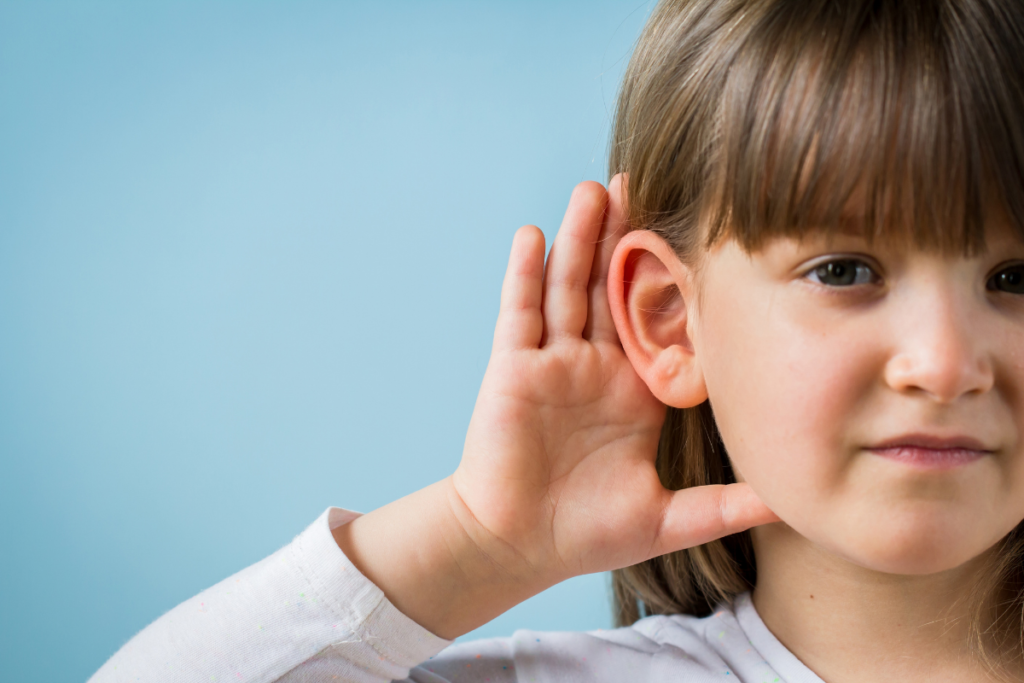
A child learns to speak by listening, so even a mild, undetected hearing loss can quietly delay speech, language and learning during the years those skills form fastest. The reassuring news is that childhood hearing loss is highly treatable when caught early — and today, from hearing aids to hearing implant surgery in Ahmedabad, almost every child can be given access to sound. Dr. Neeraj Suri explains the age-by-age warning signs every parent should know, and why acting early changes everything.
If you have any concern about your child’s hearing, the right step is a prompt evaluation with a specialist ENT doctor in Ahmedabad who has dedicated experience in paediatric hearing loss.
Why Timing Matters So Much
There is a critical window in early childhood when the brain’s language centres are primed to learn from sound. A child who cannot hear well during this period can fall behind in speech and reading in ways that become progressively harder to close. This is why newborn hearing screening exists, and why any later concern should be checked within weeks, not ‘watched’ for months. Early detection is not about anxiety — it is about using a window that does not stay open forever.
Age-by-Age Warning Signs
What counts as a red flag depends on your child’s age. Watch for these:
- Newborn to 6 months: no startle to loud sounds, not soothed by your voice, no waking to noise
- 6–12 months: no babbling, does not turn toward sounds or respond to their name
- 1–2 years: few or no words, does not follow simple spoken instructions without gestures
- 2–4 years: unclear speech, frequent ‘what?’, turning the TV up loud, seeming to ignore you
- School age: falling behind, inattention mistaken for behaviour problems, struggling in noisy classrooms
Hearing Loss Can Appear After Birth Too
Passing the newborn screen does not rule out hearing loss forever. Repeated ear infections, glue ear, certain illnesses like meningitis, some medications, and genetic factors can all cause hearing to decline later in childhood. That is why parental observation remains vital even after a clear newborn test — you are the person most likely to notice a change.
How Children’s Hearing Is Tested
Testing is painless and possible at any age, including in newborns:
- OAE: a quick probe checks the inner-ear response in seconds — the newborn screening test.
- BERA/ABR: measures the hearing nerve’s response while the baby sleeps naturally, confirming the exact level of loss.
- Tympanometry: detects fluid behind the eardrum (glue ear) in moments.
- Behavioural and play audiometry: age-appropriate games that map hearing in toddlers and older children.
Treatment: From Grommets to Hearing Implant Surgery in Ahmedabad
Treatment is matched to the cause and degree of loss. Glue ear — the commonest, temporary cause — often clears on its own or is treated with grommets. Permanent loss is managed with well-fitted paediatric hearing aids. For children with severe to profound loss who gain little from aids, hearing implant surgery in Ahmedabad, including cochlear implantation, can open up sound and spoken language — with the best results when done early and paired with speech therapy. The right path is chosen only after full testing, never assumed.
The Parent’s Role Doesn’t End at Diagnosis
Whatever the treatment, family involvement is the biggest predictor of how well a child does. Talking, reading and singing to your child, keeping therapy and follow-up appointments, and staying alert to any change in hearing all matter enormously. Technology gives access to sound; consistent interaction turns that access into language.
When Hearing Implant Surgery in Ahmedabad Is Considered for a Child
Not every child with hearing loss needs surgery — most are helped by grommets or hearing aids. Hearing implant surgery in Ahmedabad, including cochlear implantation, is considered for children with severe to profound loss who gain little useful hearing from well-fitted aids. The decision follows a thorough evaluation: detailed hearing tests, a genuine hearing-aid trial, imaging of the inner ear, and a speech-and-language assessment. Timing is critical — for a child born with profound deafness, implantation in the first couple of years makes the most of the brain’s peak window for learning spoken language, which is why prompt referral matters so much.
What Hearing Implant Surgery in Ahmedabad Involves for Families
For families, the surgery itself is only the beginning of the journey. The operation is a short, well-established procedure with a single overnight stay, and the device is switched on a few weeks later once healing is complete. What follows is the part that truly determines success: regular mapping sessions to tune the processor, and consistent speech-and-language therapy. Parents become active partners in this — talking, reading and playing with their child constantly to turn new sound into meaning. Schools and therapists are looped in so support continues everywhere the child spends time.
Catching Hearing Loss in Ahmedabad Early
The thread running through every good outcome is early detection. Newborn screening catches many cases at birth, but parental vigilance catches the rest — the babble that never comes, the name that goes unanswered, the speech that stays unclear. Treating hearing loss in Ahmedabad early, whatever the cause, gives a child the best possible foundation for speech, learning and confidence, and turns what could be a lifelong barrier into a manageable, well-supported difference.
Supporting Your Child’s Listening and Speech at Home
Whatever treatment a child receives, what happens at home shapes the result more than anything else. The single most powerful thing parents can do is talk — narrate daily routines, name objects, and respond to every attempt your child makes to communicate. Read together every day, letting your child see your face and the pictures, and sing songs and rhymes, which package language in memorable, rhythmic ways. Reduce background noise during conversations so speech stands out, get down to your child’s level and face them, and give them time to respond without rushing to fill the silence. For children with hearing aids or implants, wearing the devices during all waking hours is essential, because language is learned in ordinary moments throughout the day, not only in therapy sessions. Consistency, patience and rich everyday conversation turn access to sound into real, spoken language.
Every Child Deserves the Chance to Hear
Childhood passes quickly, and the early years never come again — which is exactly why hearing concerns should never be left to ‘see how things go’. A single painless test can transform a child’s path, either lifting a worry from your shoulders or opening the door to treatment while it works best. Whether the answer is watchful reassurance, grommets, hearing aids or an implant, acting early gives your child the fullest chance to hear, speak, learn and thrive alongside their friends. Trust what you observe, ask for a test, and let the specialists take it from there. The earlier a hearing difference is identified and supported, the smaller its impact on everything that follows — speech, reading, friendships and confidence — so a prompt check is always time well spent. Your instincts as a parent are a powerful early-warning system, and pairing them with a simple professional test is the surest way to give your child every advantage from the very start.
Trust Your Instinct — and Act on It
If something about your child’s hearing or speech feels off, you are almost certainly the first to notice, and acting early is never wasted. A simple, painless test either reassures you or catches a problem while it is most treatable. With timely care — hearing aids or hearing implant surgery in Ahmedabad where needed — the vast majority of children go on to hear, speak and learn alongside their peers.
Worried About Your Child’s Hearing? Book a Test
If you have any doubt about how your child hears or speaks, don’t wait for them to ‘grow out of it’. Book a child-friendly hearing assessment with Dr. Neeraj Suri at Evara Hospital. Call +91 95122 68282 or book online — evening and Sunday OPDs available for parents across Ahmedabad and Gandhinagar.
Author & Medical Review
Dr. Neeraj Suri, MS (ENT) — Ex-Fellow, Stanford University & House Ear Institute, Los Angeles; Ex-Associate Professor, GMERS Medical College, Gandhinagar. Medically reviewed by Dr. Neeraj Suri.
FAQs
Q. My child passed the newborn screen — can they still develop hearing loss?
A. Yes. Infections, glue ear, illness and genetic factors can cause later loss, so stay alert to the age-by-age signs.
Q. At what age can hearing aids be fitted?
A. Very early — babies can be aided in the first months of life once the degree of loss is confirmed by BERA.
Q. Is glue ear permanent?
A. No — it is usually temporary and often resolves; persistent cases are treated simply with grommets.
Q. How early should a cochlear implant be done in children?
A. Ideally before age two for profound loss, to make the most of the brain’s language-learning window.